September 16, 2026

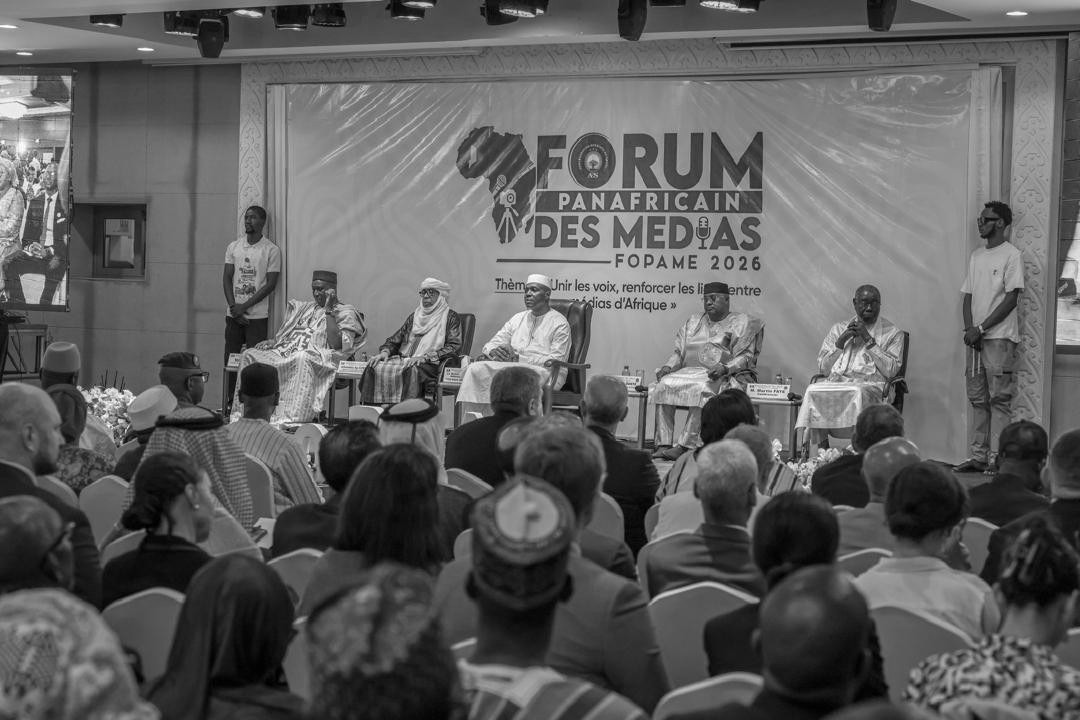
BAMAKO, Mali – Organisée par la Maison de la Presse du Mali, la première édition du Forum Panafricain des Médias (FOPAME) s’est tenue du 3 au 6 juin 2026 dans une atmosphère de convivialité et d’échange fructueux au Centre international de conférences de Bamako (CICB). Pendant quatre jours, cette rencontre a réuni des journalistes et professionnels des médias venus d’une vingtaine de pays d’Afrique, ainsi que d’Haïti, afin d’échanger entre eux et avec les pouvoirs publics. Le FOPAME était placé sous le haut parrainage de Son Excellence le Général d’Armée Assimi Goïta, Président de la Transition et Chef de l’État du Mali.
Au cœur des discussions figuraient les questions de souveraineté médiatique et narrative, de coopération entre les médias africains et de lutte contre la désinformation. La séance d’ouverture a été marquée par les allocutions de bienvenue de M. Dante Bandiougou, Président de la Maison de la Presse du Mali, de M. Salif Sanogo, Président de la Commission d’organisation et Coordonnateur Général de la Télévision AES, ainsi que par les discours du Ministre des Affaires étrangères et de la Coopération internationale, M. Abdoulaye Diop, et du Premier ministre, Général de Division Abdoulaye Maïga.
Dans l’esprit du thème du forum, « Unir les voix, renforcer les liens entre les médias d’Afrique », le ministre Abdoulaye Diop a insisté sur la nécessité pour les acteurs africains de travailler ensemble au service du bien commun. Il a également dénoncé les obstacles et les réticences de certains acteurs qui ne souhaiteraient pas voir les Africains unir leurs efforts et construire leurs propres cadres de coopération.
Pour sa part, le Premier Ministre Abdoulaye Maïga a souligné les profondes transformations des moyens de production, de diffusion et de consommation de l’information. Selon lui, le numérique, les réseaux sociaux et l’intelligence artificielle offrent aujourd’hui des possibilités inédites pour informer, éduquer, rapprocher les peuples et favoriser un accès plus large au savoir.
« Distingués invités, Mesdames et Messieurs, nous vivons une époque où l’information est devenue l’une des ressources les plus stratégiques », a déclaré le Premier ministre à l’ouverture de son intervention.
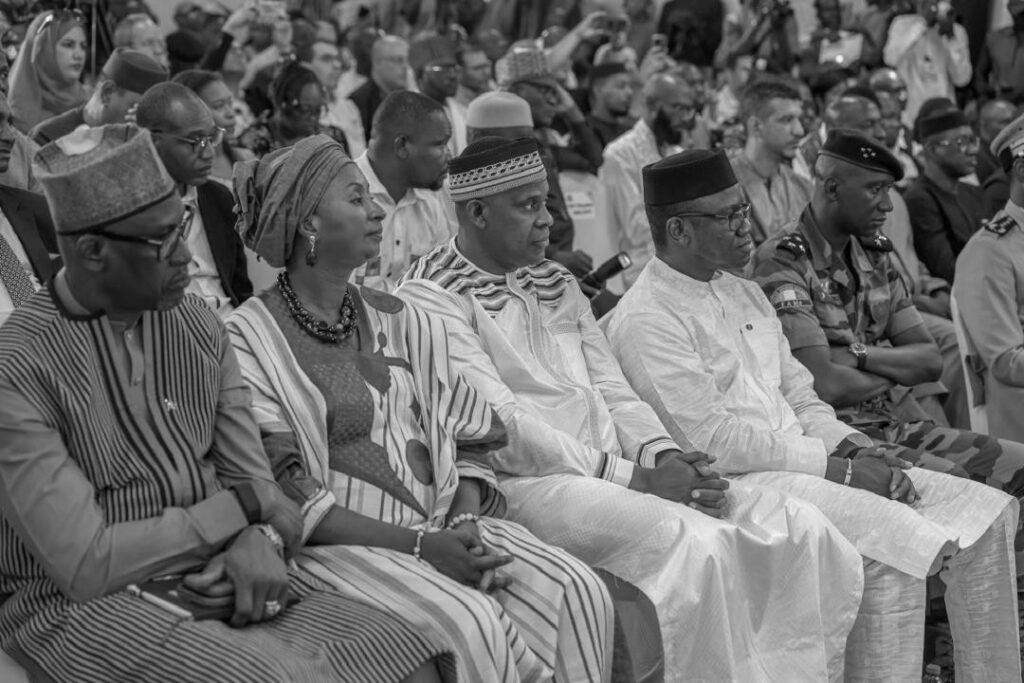
Le Général de Division a également consacré une partie de son discours à ce qu’il a qualifié de trois idées à déconstruire concernant la transition malienne. La première serait que celle-ci serait dépourvue de cap, alors qu’il a soutenu qu’elle est la plus courte parmi les quatre transitions qu’a connues le pays. La deuxième serait celle d’un isolement du Mali, qu’il a rejetée en affirmant que la transition bénéficie du soutien de nombreux partenaires et acteurs internationaux. La troisième concerne l’Alliance des États du Sahel (AES), qui, selon lui, n’a pas été créée comme un instrument dirigé contre la CEDEAO, rappelant que le préambule de la Charte de l’AES fait référence au traité instituant la Communauté économique des États de l’Afrique de l’Ouest.
Le Ministre de la Communication, M. Alhamdou Ag Ilyène, a pour sa part présenté plusieurs réalisations du gouvernement qui, selon lui, sont peu relayées dans les médias, notamment le projet de la construction d’une quinzaine d’hôpitaux.
La deuxième journée du Forum a porté sur plusieurs thématiques, dont la guerre informationnelle, les enjeux de paix et de réconciliation dans les contextes de conflit et de post-conflit, ainsi que l’éducation aux médias.
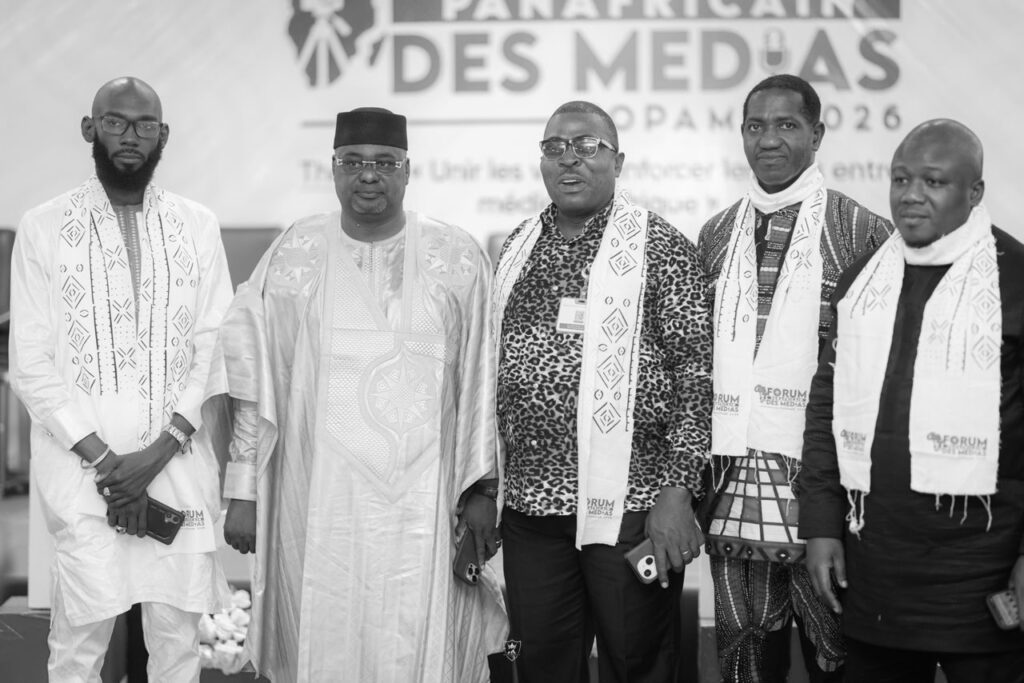
La troisième journée a exploré des sujets tels que la mutualisation et la solidarité entre les médias africains, les défis de l’information en période de crise et de conflit, ainsi que la protection des journalistes.
La dernière journée a notamment abordé les questions liées aux médias et au leadership féminin, ainsi que les implications de l’intelligence artificielle dans l’univers médiatique.
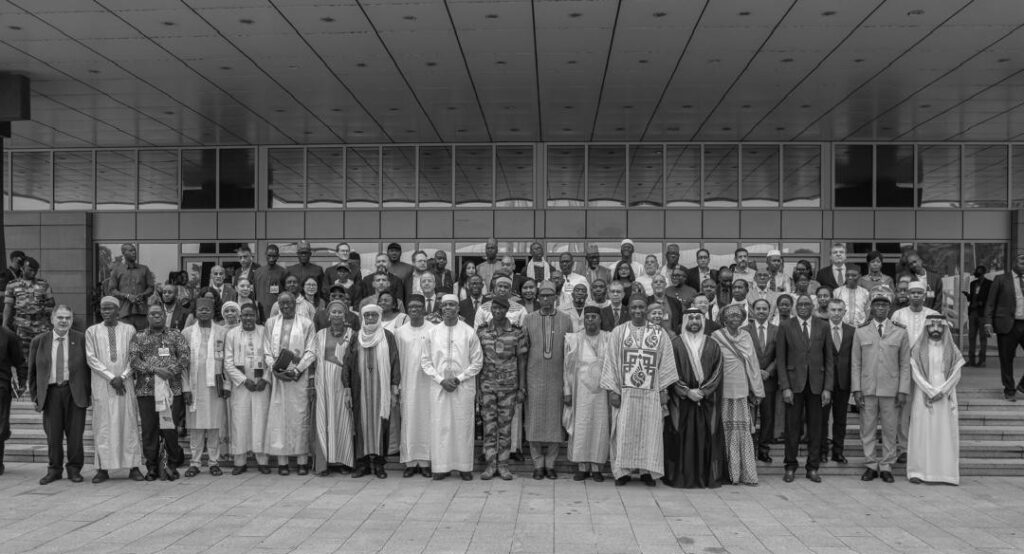
Pour cette première édition, le Royaume du Maroc était le pays invité d’honneur. La Côte d’Ivoire, le Sénégal, Haïti et la Palestine figuraient notamment parmi la vingtaine de pays d’Afrique et d’ailleurs représentés au Forum.
Les travaux se sont achevés avec l’adoption de l’Appel de Bamako, qui invite les acteurs médiatiques africains à bâtir un espace médiatique libre, solidaire et souverain, capable de devenir maître de son propre récit dans le paysage médiatique mondial.
Si le Forum a été largement salué pour la qualité des échanges, la richesse des débats et la participation soutenue des délégations présentes, une note plus controversée est venue marquer son lendemain avec la mise sous mandat de dépôt de deux journalistes seniors pour des faits présumés attentatoires au crédit de l’Etat. Cet événement a suscité des interrogations chez plusieurs observateurs quant à l’équilibre entre l’ambition de construire une souveraineté médiatique africaine et la nécessité de préserver pleinement la liberté de la presse et le pluralisme des opinions.
_________________________________________________________________________________________________
BAMAKO, Mali – Organized by the Maison de la Presse du Mali, the first edition of the Pan-African Media Forum (FOPAME) was held from June 3 to 6, 2026, in an atmosphere of conviviality and fruitful exchanges at the Bamako International Conference Center (CICB). Over the course of four days, the gathering brought together journalists and media professionals from approximately twenty African countries, as well as Haiti, to exchange ideas among themselves and with public authorities. FOPAME was held under the high patronage of His Excellency Army General Assimi Goïta, President of the Transition and Head of State of Mali.
At the heart of the discussions were issues relating to media and narrative sovereignty, cooperation among African media organizations, and the fight against disinformation. The opening ceremony featured welcoming remarks by Mr. Dante Bandiougou, President of the Maison de la Presse du Mali; Mr. Salif Sanogo, President of the Organizing Committee and General Coordinator of AES Television; as well as speeches by the Minister of Foreign Affairs and International Cooperation, Mr. Abdoulaye Diop, and the Prime Minister, Major General Abdoulaye Maïga.
In the spirit of the forum’s theme, “Uniting voices, strengthening ties among Africa’s media,” Minister Abdoulaye Diop emphasized the need for African stakeholders to work together in the service of the common good. He also denounced the obstacles and reluctance of certain actors who would not wish to see Africans unite their efforts and build their own frameworks for cooperation.
For his part, Prime Minister Abdoulaye Maïga highlighted the profound transformations affecting the means of producing, disseminating, and consuming information. According to him, digital technology, social media, and artificial intelligence now offer unprecedented opportunities to inform, educate, bring peoples closer together, and promote broader access to knowledge.
“Distinguished guests, ladies and gentlemen, we are living in an era where information has become one of the most strategic resources,” declared the Prime Minister at the opening of his address.
The Major General also devoted part of his speech to what he described as three misconceptions that should be deconstructed regarding Mali’s transition. The first was the notion that the transition lacks a clear direction, whereas he argued that it is the shortest among the four transitions the country has experienced. The second was the idea that Mali is isolated, which he rejected by affirming that the transition enjoys the support of numerous partners and international actors. The third concerned the Alliance of Sahel States (AES), which, according to him, was not created as an instrument directed against the Economic Community of West African States (ECOWAS), noting that the preamble of the AES Charter refers to the treaty establishing ECOWAS.
The Minister of Communication, Mr. Alhamdou Ag Ilyène, also presented several achievements of the government that, according to him, have received little media attention, notably the project involving the construction of approximately fifteen hospitals.
The second day of the forum focused on several themes, including information warfare, the challenges of peace and reconciliation in conflict and post-conflict contexts, as well as media literacy.
The third day explored subjects such as cooperation and solidarity among African media organizations, the challenges of information dissemination during times of crisis and conflict, and the protection of journalists.
The final day addressed issues related to media and women’s leadership, as well as the implications of artificial intelligence in the media landscape.
For this first edition, the Kingdom of Morocco was the guest country of honor. Côte d’Ivoire, Senegal, Haiti, and Palestine were among the approximately twenty countries from Africa and other regions represented at the forum.
The proceedings concluded with the adoption of the Call of Bamako, which calls upon African media stakeholders to build a free, united, and sovereign media space capable of becoming the master of its own narrative within the global media landscape.
While the forum was widely praised for the quality of its exchanges, the richness of its debates, and the active participation of the delegations in attendance, a more controversial development emerged the day after its conclusion with the detention of two senior journalists on allegations of acts deemed harmful to the credibility of the State. This event raised questions among several observers about the balance between the ambition to build African media sovereignty and the necessity of fully preserving freedom of the press and diversity of opinion.