
March 15, 2026



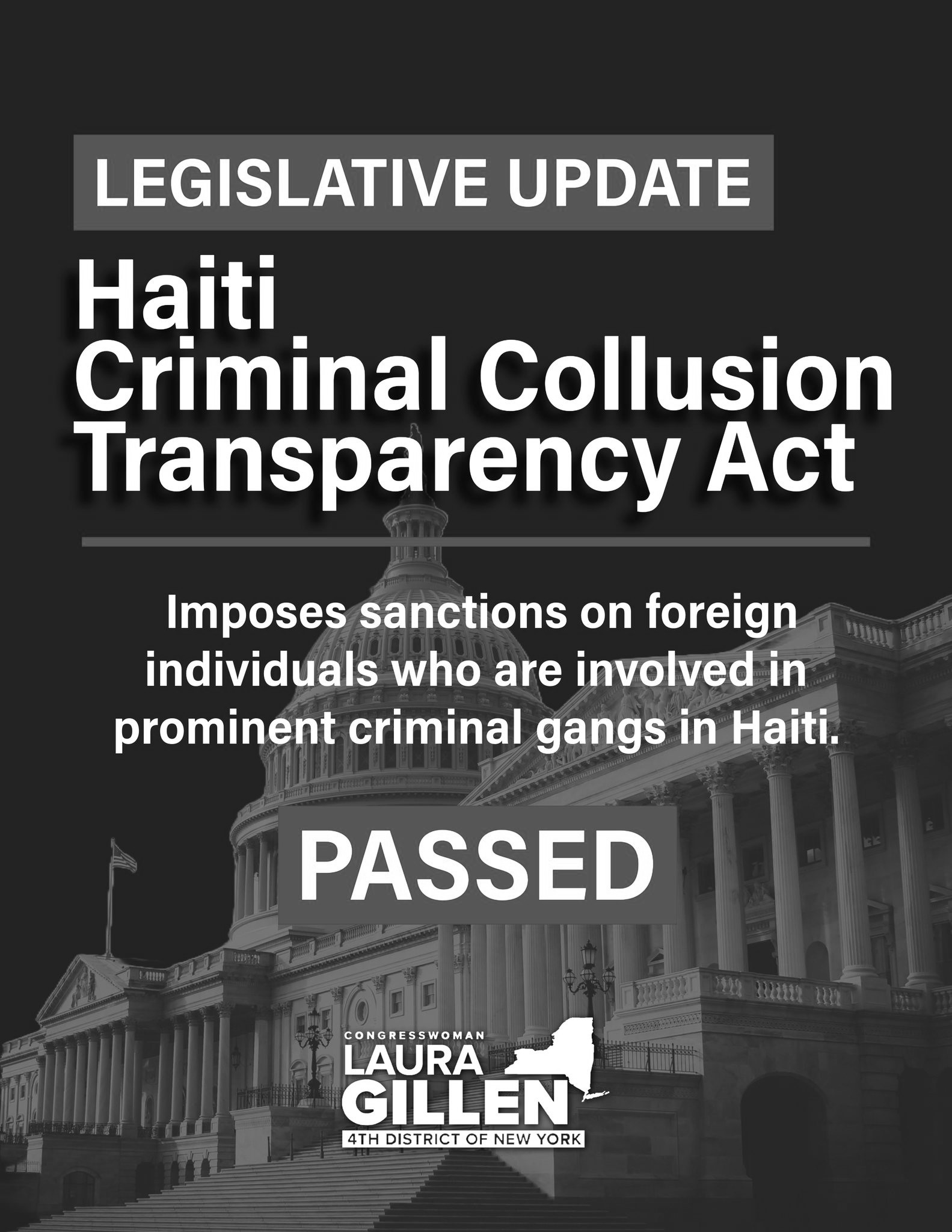
Adopted as part of the U.S. defense appropriations legislation, the Haiti Criminal Collusion Transparency Act marks a turning point in Washington’s approach to the Haitian crisis. Passed by Congress and awaiting presidential enactment, the law requires the U.S. administration to investigate links between armed gangs and Haitian political or economic elites.
Over a five-year period, the legislation mandates the regular submission of detailed reports to Congress by the State Department. These reports must map criminal collusion, identify dominant gangs and their leaders, as well as public officials or business figures involved, and specify the interests served by these alliances.
Beyond diagnosis, the framework introduces a clear punitive component, requiring the imposition of targeted economic sanctions against any individual found guilty of supporting or profiting from gang activities. For the bill’s sponsors, striking financial and political facilitators is a prerequisite for any lasting stabilization of Haiti.
The legislation is backed by a bipartisan coalition, bringing together Democrat Gregory Meeks in the House of Representatives, Senator Jeanne Shaheen in the Senate, and Republican Rick Scott. It is the only substantial piece of Haiti-related legislation adopted by the U.S. Congress this year, underscoring its political significance.
This legislative initiative follows advocacy efforts launched as early as 2023 by Haitian civil society actors and members of the diaspora. An international mobilization, led notably by Pastor Gregory Toussaint, gathered more than 110,000 signatures calling for legal action against figures accused of fueling armed violence.
Organizations such as Faith in Action International have welcomed the measure as a step toward “restoring the truth” about the structural causes of insecurity in Haiti. They also argue that the law strengthens the case for maintaining Temporary Protected Status (TPS) for Haitians in the United States, given ongoing insecurity and the closure of the international airport, which make large-scale returns unrealistic.