March 17, 2026


On March 11, 2024, CARICOM convened Haitian actors for a meeting in Kingston, Jamaica, which led to the formation of the Transitional Presidential Council (TPC). This new executive body, made up of nine members, was supposed to offer a solution to Haiti’s political crisis. However, more than a year later, the record is alarming: no elections have been held and the security crisis has worsened, revealing the inability of law enforcement to maintain order.
Recently, the UN voted to transform the mandate of the Multinational Security Support (MSS) mission into a Gang Suppression Force (GSF)—a force aiming for about 5,550 personnel with enhanced detention powers. But can we really expect any meaningful results from such a transformation? Was staffing the main obstacle to success, or are other factors at play?
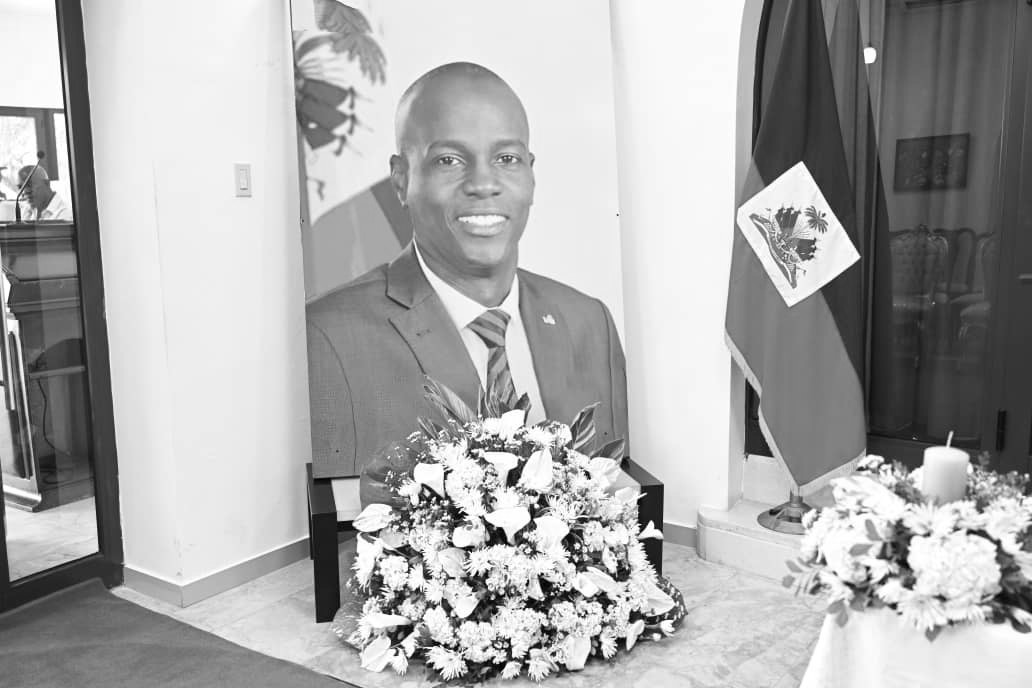
It has been nearly a year and a half since former Prime Minister Ariel Henry announced his resignation as part of the transition. It has been over four years since President Jovenel Moïse was assassinated at his home. And since then, Haiti have lived through the impasse of a “democracy” that has not kept its promises, with the same conditions and the same actors producing the same results. One question imposes itself:
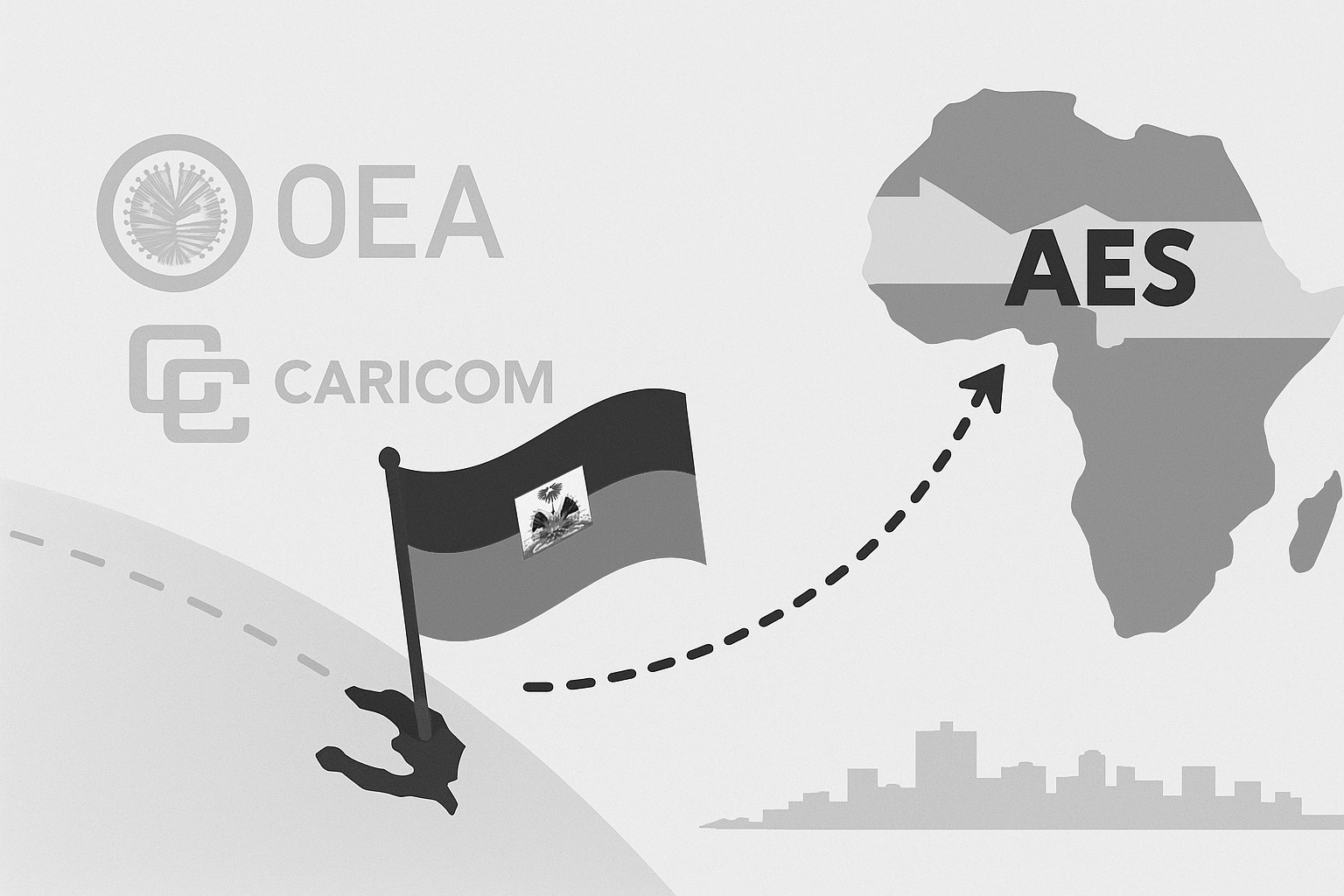
Should Haiti not renew its list of our partners and allies?
Consider the case of Mali, Burkina Faso, and Niger which, after signing the Liptako-Gourma Charter in September 2023, decided to focus on their own development and defense. By exiting certain regional blocs such as ECOWAS (the Economic Community of West African States)—which they judged did not serve their interests so much as those of outside actors—they created the Confederation/Association of Sahel States (AES in French), which recorded significant progress despite major challenges like terrorism.
The creation of the AES in September 2023 is an expression of the three countries’ will to strengthen their cooperation and independence in the face of external pressure. Leaving certain regional blocs has allowed them to fully exercise their sovereignty by forging new agreements that address their challenges.
For example, in November 2023, with external security support, Mali retook control of Kidal from the Tuareg rebel bloc—symbolizing a return of the state in the North, even if insecurity persists. In Burkina Faso, the army regained control of nearly 73% of the territory, compared with 60% before. And Niger, among other measures, nationalized its uranium.
On September 16, 2025, the AES marked two years of existence. Despite difficulties—terrorism and regional sanctions/closures that hit landlocked countries—the AES claims unprecedented advances.
By contrast, Haiti seems trapped in a cycle where the same actors produce the same results, with no clear vision to overcome the crisis. If Haiti decided to govern itself on its own terms, would it be possible to find an internal solution to its problems of security and poverty?
As for Haiti, surrounded by the same partners of yesterday and today, the same results persist. The Haitian people continue to pay the price for state-level inconsistency, with armed groups sowing terror and dominating nearly 80% of the capital. But what if Haiti decided to govern itself on its own terms? And if, in a national act of transcendence, Haitians were to stop airing their dirty laundry in public in order to emerge from the security crisis?
The conclusion converges on this: at its root, the problem is Haitian. The solution can only be Haitian. It will come neither from the OAS, nor from CARICOM, nor from the UN; nor from an international mission, whatever its configuration. The way out of the crisis will come from Haitian women and men, in all their components, if they are ready to meet today’s challenges and rise to the demands of the moment.
By Jaury Georges Jean-Enard and Donatien Y. AHOUANDJINOU