
March 16, 2026




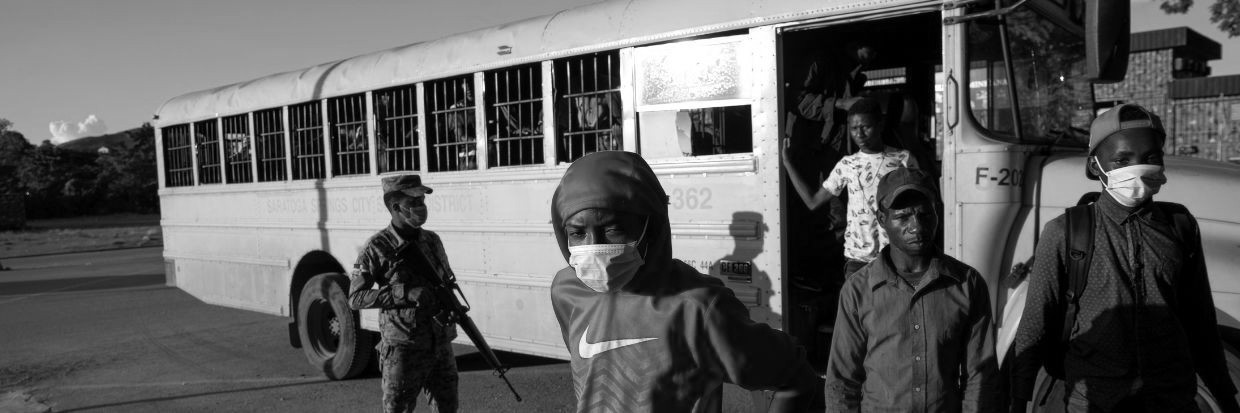
Between October 1 and October 31, 2025, the Support Group for Repatriates and Refugees (GARR) reported that 20,319 Haitians were expelled from the Dominican Republic to Haiti through official border points. The main crossing sites were Belladère (9,763), Ouanaminthe (6,816), Malpasse (1,806), and Anse-à-Pitres (1,934).
This surge forms part of a broader migration crackdown initiated by President Luis Abinader since October 2024, involving systematic expulsions and daily operations targeting Haitian migrants. Over the past year, more than 370,000 Haitians have reportedly been deported—a record under the current administration, according to the EFE news agency.
Human rights organizations denounce what they describe as structural persecution, pointing to mass expulsions, discriminatory checks in hospitals, and racially targeted enforcement. Amnesty International has labeled the policy “institutional racism,” citing, among other examples, the deportation of pregnant women as an inhumane and unjust practice.
The Dominican state, however, stands by its policy. A presidential directive sets targets of up to 10,000 expulsions weekly. Brigades have been deployed across 19 provinces to reinforce migration controls, and according to Abinader, these measures aim to protect “territorial integrity” and “national security,” despite international condemnation of their discriminatory nature.