
March 15, 2026




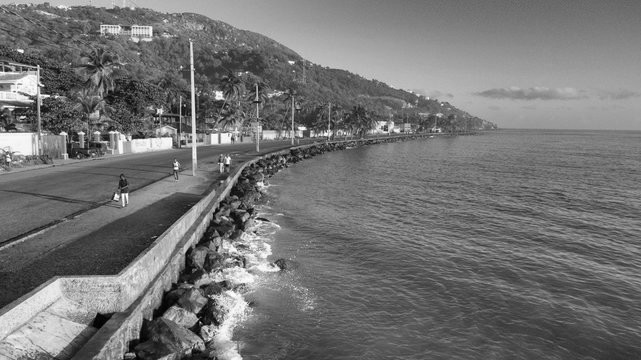
On January 9, 2026, Haitian authorities launched a large-scale demolition operation on Cap-Haïtien’s tourist boulevard. The action, carried out under the coordination of the departmental delegate, the government commissioner, and law enforcement, followed a 72-hour ultimatum issued to occupants.
Hotels, restaurants, and nightlife establishments were completely razed in the name of restoring public order. The method employed, deemed brutal, immediately sparked incomprehension and indignation among the local population.
Yet the targeted sector represented one of the city’s few remaining active tourist spaces. Its anarchic development was well known and had persisted for years under the passive, if not complicit, gaze of authorities.
In the absence of any development plan, relocation, or reconstruction strategy, the intervention appears as a belated and unbalanced response to a long-standing disorder. The State seems to be replacing one form of arbitrariness with another, without a long-term structuring vision.
This operation also raises questions about public priorities in Cap-Haïtien. The city continues to face far more urgent challenges, notably deteriorating infrastructure, chronic electricity shortages, and limited access to potable water.