
March 16, 2026



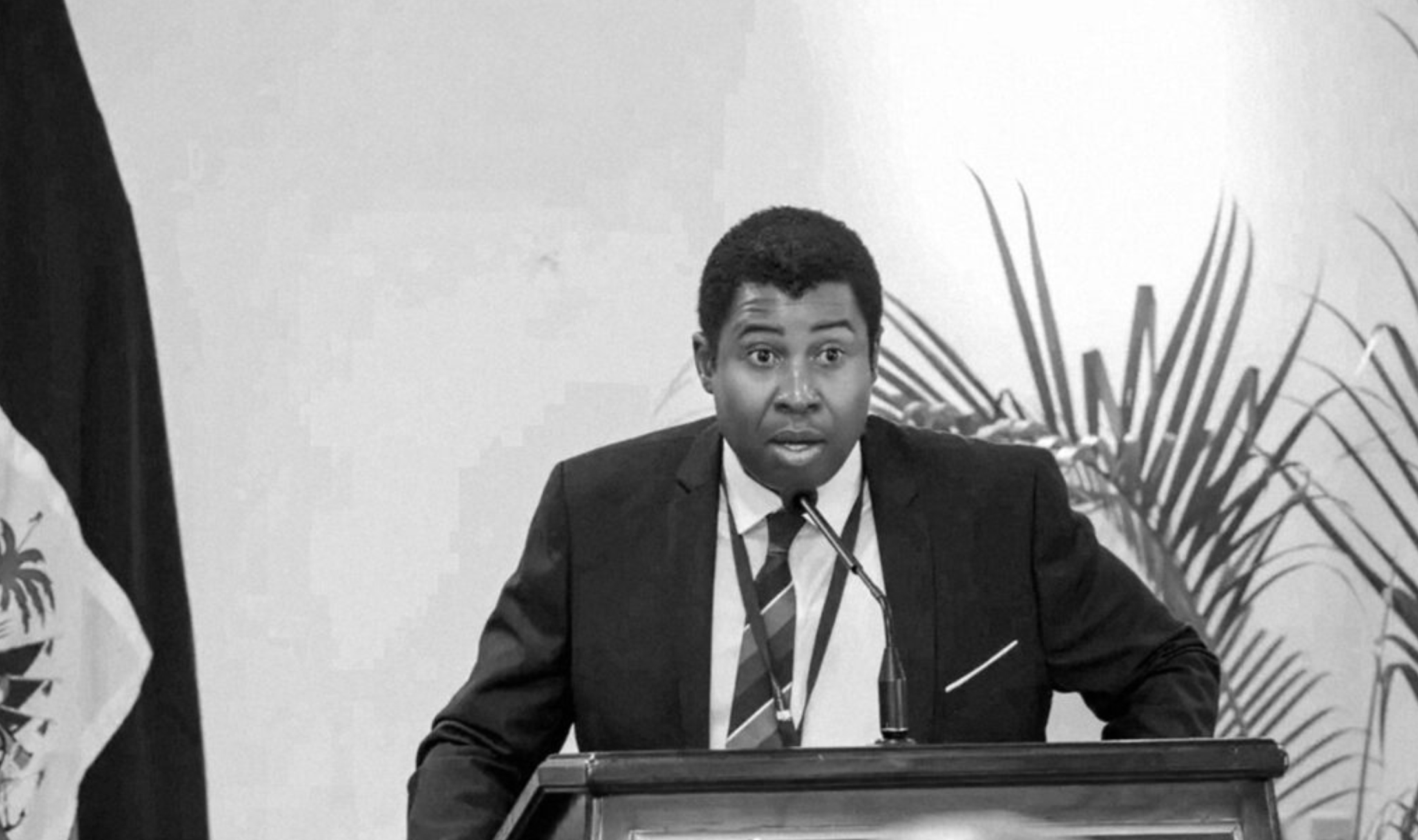
In Paris, on December 16, 2025, the Rector of the State University of Haiti and President of the CNHRR, Professor Dieuseul Prédélus, raised the issue of restitution and reparations within the symbolic walls of the Sorbonne. The conference, devoted to the postcolonial indemnities imposed on Haiti in 1825, brought together academics, intellectuals, and members of the diaspora for a direct debate on France’s historical responsibility.
From the outset of his remarks, Dieuseul Prédélus set out the political and moral framework of Haiti’s claim, advocating for an act of justice grounded in law and memory. “It is with particular emotion that I stand today in this prestigious setting of the Sorbonne […] to carry a message of justice and restitution,” he declared.
Recalling the origin of the debt, he emphasized that Haiti had been forced, under military threat, to compensate its former colonists for its freedom. “A people who had won their freedom at the cost of their blood had to pay in order not to be returned to slavery,” he denounced, describing this demand as a “moral absurdity.”
According to the CNHRR president, this debt—contracted under usurious conditions—durably stifled the country’s development. “Every school not built, every road not laid, every hospital not constructed bears the imprint of this iniquitous debt,” he stated, citing an updated value estimated between 21 and 115 billion dollars.
Far from a vengeful discourse, Dieuseul Prédélus stressed a structured and collective approach, supported by international law and a new momentum in France. Welcoming the emergence of “another community of ideas” and the French parliamentary resolution of June 5, 2025, he recalled that “the restitution we demand is not a favor; it is an act of elementary justice.”